The Demand Shift: Six Ways AI Creates More Work Than It Replaces
The Six Types of Demand Elasticity That Will Drive AI-Era Job Creation: Why the Real Question Is What Happens When Costs Collapse
The standard AI-jobs debate asks whether automation destroys work — but the more consequential question is what happens to demand when production gets cheap enough for everyone.
My last three client engagements have all been the same thing: replacing SaaS. Two CRM replacements and one contact center management platform, all swapped out for custom-built AI-native software. Not because the incumbent platforms were bad. Because building something purpose-fit now costs a fraction of what it did two years ago — and the clients who could never afford that conversation are the ones calling now.
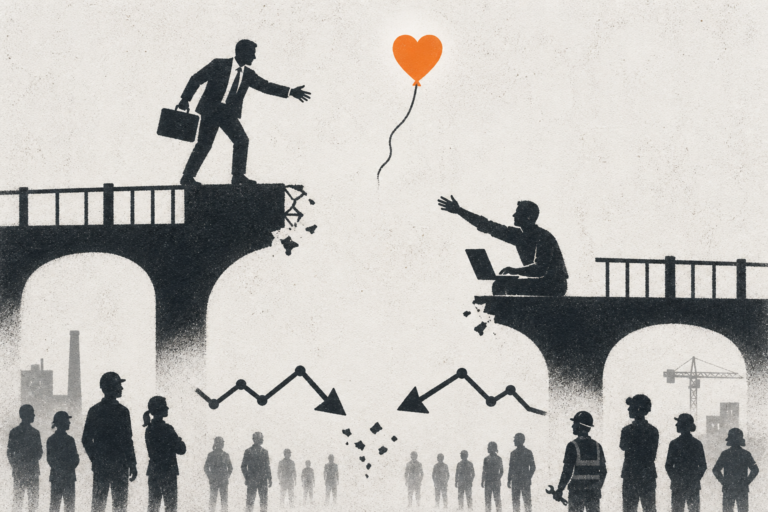
That is not a coincidence. It is a structural shift in who can afford what. And once you see it that way, the entire AI-jobs debate looks different. The question most executives are asking — “Will AI eliminate jobs?” — is real, but it is the wrong frame. The more consequential question is: what happens to demand when AI collapses the cost of production? Because when production gets cheap, markets don’t just stay the same size with fewer workers. They get bigger. New buyers enter. New categories emerge. And the work that remains tends to be the work that was never really about production in the first place.
The economics framework that explains this has a name — demand elasticity — and it is about to matter more for your strategic planning than anything in a typical AI trend report.
The Wrong Debate: Displacement Versus Demand Expansion
The dominant narrative frames AI as a subtraction problem. A task gets automated; a worker loses that task; a job disappears. The Goldman Sachs baseline forecast — roughly 11 million jobs eventually displaced over the long term — is cited regularly as the headline number. Job openings at companies actively discussing AI in their earnings calls have dropped about 12%, compared to 8% across the broader market. The data is real. The framing is incomplete.
What that displacement narrative misses is the second-order effect that has played out every time production costs collapsed historically. When the steam engine made coal combustion more efficient, it did not reduce coal consumption. It expanded it, because dozens of applications that were previously uneconomic suddenly made sense. Economists call this Jevons’ paradox. It applies to labor, too: when AI makes a skilled worker dramatically more productive, and demand for that worker’s output is elastic, you frequently end up with more work in that category, not less.
The key word is elastic. Not all demand responds the same way to lower prices. A research analysis that cost $50,000 and took six weeks does not automatically generate ten times the demand at $5,000. It depends on who wanted it, why they were priced out, and what they would actually do with access to it. That nuance is where the job-creation story lives — and it maps onto six distinct types of elasticity, each of which is already generating observable demand in the AI economy.
The cynical read here is that this is just a longer way of saying “AI creates new jobs to replace the old ones.” Fine. That read is also wrong, because the mechanism is different. This is not about AI inventing new categories from whole cloth. It is about collapsing the price floor on existing value until categories of buyers that were always there can finally enter the market.
Six Ways Collapsing Costs Expand Markets
Most durable
Entry point
As AI automates the lower layers, budget and employment migrate upward toward relational work.
Price threshold activation is the most straightforward. Every service has a price above which most potential buyers never seriously engage. Custom software development lived above that threshold for the vast majority of mid-market companies — the math on a six-figure, six-month engagement never worked. That threshold has moved. The CEO of Retool described the shift plainly: two years ago, a custom internal tool might take weeks and cost six figures; today a business operations lead can have a working prototype in a day or two. That is not an incremental improvement. It is a threshold crossing. Thirty-five percent of enterprises have already replaced at least one SaaS tool with a custom build; 78% plan to build more in 2026. The market did not shrink because off-the-shelf software got automated. It expanded because a new tier of buyer entered.
Access elasticity operates on scarcity, wait times, and geography rather than price alone. Expert AI implementation used to require being in a market large enough to support an AI consultancy, or a procurement budget large enough to attract one. Remove those constraints and you do not merely serve existing demand faster — you reveal demand that was structurally invisible before. A mid-market manufacturer in a secondary city was not a slow adopter. They were a buyer who could never access the product at all.
Complexity elasticity describes what happens when opaque systems become navigable. Regulatory compliance, supply chain modeling, healthcare billing — these domains have historically required expensive specialists not because the underlying decisions were necessarily so difficult, but because the information environment was so hostile to non-experts. AI that makes complexity navigable does not eliminate the expert; it shifts what the expert is doing. The specialist who spent 60% of their time extracting and formatting data now spends that time on the judgment that the data was never about.
Continuity elasticity is the one that tends to surprise executives when they see it. Always-on support, always-on monitoring, always-on analysis — these have been luxury-tier services because human availability has an irreducible cost floor. When AI makes continuity economically viable at the mid-market level, it creates categories that did not previously exist in that segment. Companies that renewed their SaaS subscription annually and filed a ticket when something broke are now asking what it would look like to have ongoing embedded capability that learns their operation. That is a new market, not a displaced one.
Personalization elasticity follows from the same logic. Mass customization — the ability to configure a solution genuinely to a specific organization rather than stretch a generic product until it approximately fits — has been the province of enterprise deals with enterprise pricing. The 200-person professional services firm that needed its CRM to reflect how it actually runs client relationships, not how Salesforce imagines it should, did not have options. Now it does. Custom is no longer a synonym for expensive.
Relational elasticity is the most structural of the six, and the one that matters most for where durable jobs form. As AI commoditizes the delivery layer — code generation, data analysis, reporting, synthesis — the element that cannot be commoditized is the human judgment that knows what to build, for which industry, and how to embed it in an organization that has to live with it. This is not a soft claim about human specialness. It is an economic claim about scarcity. The relational layer becomes the scarce input precisely because everything beneath it is no longer scarce.
The Relational Premium: Why Human Judgment Becomes More Valuable, Not Less
Starbucks spent several years engineering efficiency into its store operations — mobile ordering, automated sequencing, reduced labor per transaction. Customers left. The new CEO reversed course, added baristas, brought back handwritten names on cups and ceramic mugs for in-store orders. The finding was uncomfortable for the efficiency thesis: the human presence was not overhead. It was the product.
This is the pattern that runs through the structural change research on AI and labor. As automated sectors grow more efficient and their outputs become cheaper, consumer spending does not stay proportionally in those sectors. It shifts toward categories with higher income elasticity — categories where what people are buying is not the output itself but the experience, the provenance, the relationship, the sense that something was made for them by someone. Research on household expenditure patterns shows that high-income households do not simply buy more of everything as their incomes rise. They shift toward goods and services with a strong relational or experiential component: in-person dining, specialized education, bespoke services, live performance. The ratio of spending in those relational categories between the highest and lowest income quintiles is far larger than the overall spending ratio. As AI raises real incomes, that shift accelerates.
Source: What Will Be Scarce?, Alex Imas, 2026; structural change framework after Comin, Lashkari & Mestieri (2021)
The implications for mid-market service businesses are direct. A consulting engagement that produces a polished report is competing with AI-generated reports. A consulting engagement that embeds a team inside an organization, learns how decisions actually get made, and builds systems that survive contact with the real culture — that is not competing with AI. It is using AI. The relational layer is the product; the AI is the capability that lets the relational layer operate at a price point that was previously impossible.
This is already visible in how AI implementation work is being specified. The clients calling now are not asking for a report on AI strategy. They are asking for someone to come in, understand the organization, and build something that works in their specific environment — and keep it working. That is a relational service. It scales differently than commodity delivery, prices differently, and requires a different kind of expertise.
The Long Tail Activates: Who Can Now Afford What They Couldn’t Before
Building custom software drops from six figures and weeks to days and thousands.
The math that never worked — renew SaaS or commission custom — suddenly does.
35% of enterprises have already replaced a SaaS tool with a custom build. 78% plan to build more in 2026.
Source: Enterprises Are Replacing SaaS Faster Than You Think, Newsweek/Retool, February 2026
There is a category of organizations that always had legitimate need for sophisticated AI implementation but was priced entirely out of the market. Not fringe buyers — serious organizations with real operational complexity, real budget constraints, and real reasons to have stayed on generic SaaS platforms because the alternative never made financial sense.
That category is activating. Two CRM replacements and a contact center platform in a quarter is not an anomaly. It is a sample from a much larger population that is crossing the threshold simultaneously.
The economic logic is straightforward. Two years ago, commissioning a purpose-built CRM required a software development engagement: requirements gathering, design, development, testing, deployment — weeks of specialized labor, six-figure minimum. The clients in that category renewed their Salesforce subscription and added another integration. Today, that same client can have a working prototype built in days, with an AI-native development platform generating most of the code and the engagement value concentrated in the architecture, the domain expertise, and the deployment judgment. The price point crossed their threshold. They called.
The 78% of enterprises planning custom builds in 2026 are not all large enterprises with existing development teams. They are mid-market organizations that have done the math and found, for the first time, that the math works. What they need when they start that project is not a software development firm. It is a partner who can assess what they actually need, align the build to how their organization works, and stay engaged long enough to make sure the system does what it was supposed to do. That is not a software project. It is an advisory relationship with a technical delivery component. The work is different. The value is different. The pricing conversation is different.
The Continual Platform Model: What the New Engagement Actually Looks Like
The engagement model that fits this market is not a project model. A project has a scope, a timeline, a delivery, and an end. What mid-market clients commissioning purpose-built AI systems actually need is a continual development capability — a platform that assesses the current state of their operations, aligns the build to what will actually work in their environment, deploys iteratively, and measures outcomes in ways that allow continuous refinement. The system is never done because the organization is never done changing.
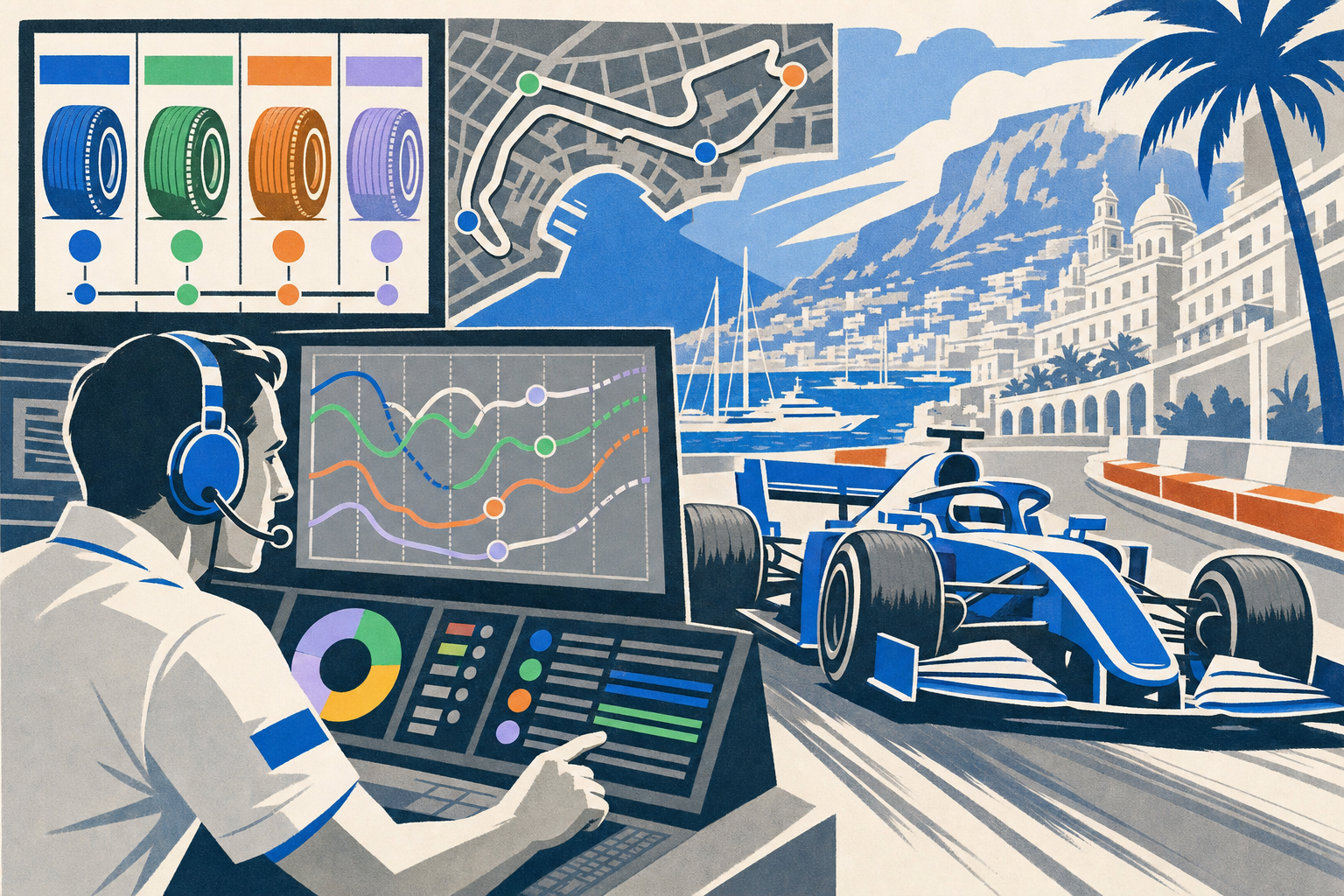
This is the race engineer, not the driver. An F1 race engineer manages tire compounds, fuel loads, aerodynamic trade-offs, and pit stop timing across sixty-plus laps — operating with a more explicit and transferable form of craft knowledge than any driver on the grid. The driver executes. The engineer decides. That split is not a reduction in skill. It is a reorganisation of it. When AI agents handle the code generation, the domain knowledge that specifies what to build, for which organisation, and the judgment to know when the output is subtly wrong has to become rigorous and institutionalised. That shift does not reduce the craft. It demands more of it.
The agentic development platform follows the same pattern. AI agents generate most of the code. The value lies in the technical architecture that directs them, the domain knowledge that specifies what they build, and the judgment to recognize when the output is subtly wrong — syntactically correct but organizationally disastrous. That last capability is not learnable from training data. It comes from having been inside enough organizations to know what failure looks like before it’s visible in a metrics dashboard.
The continual platform model also answers the continuity elasticity question in practice. Clients who are building rather than buying are not signing up for a one-time implementation. They are establishing an ongoing relationship with a team that holds institutional knowledge about their systems. The switching cost is lower than a legacy SaaS contract, but the depth of engagement is higher. That combination — accessible entry, deepening relationship, compounding institutional knowledge — is the structural form that durable professional services take in the AI era.
This Is Not a Prediction. It Is Already Happening.
The debate about AI and employment is, in many ways, a debate about whether history will repeat the pattern of every previous general-purpose technology: short-term displacement, long-term demand expansion, net job creation in categories that didn’t exist before. That debate is unresolved. The long-run is genuinely uncertain.
What is not uncertain is the near-term pattern in markets where cost thresholds are crossing in real time. The clients replacing SaaS with custom builds are not speculating about the future. They are making decisions they could not afford to make eighteen months ago. The work those decisions create is not lower-skilled than the SaaS renewal it replaced — it is more demanding, more relational, and more specific to the organization commissioning it. The expertise required to do it well compounds rather than commoditizes.
The question worth asking — the one with operational consequences — is not whether AI will create or destroy jobs in aggregate. It is which elasticity types are activating in your sector right now, and whether your business model is positioned to serve the buyers crossing the threshold. What crosses that threshold is not the technology itself. It is the race engineer — the person whose understanding of the machine is precisely what makes the machine worth having. That expertise does not commoditize. It compounds. The long tail is not coming. It is already in your inbox.
Sources
-
Alex Imas and Soumitra Shukla · March 2026
-
Anthropic · September 2025
-
Peter H. Diamandis · December 2025
-
Alex Imas · April 2026
-
Newsweek · February 2026